Livestock Traceability Software Kenya
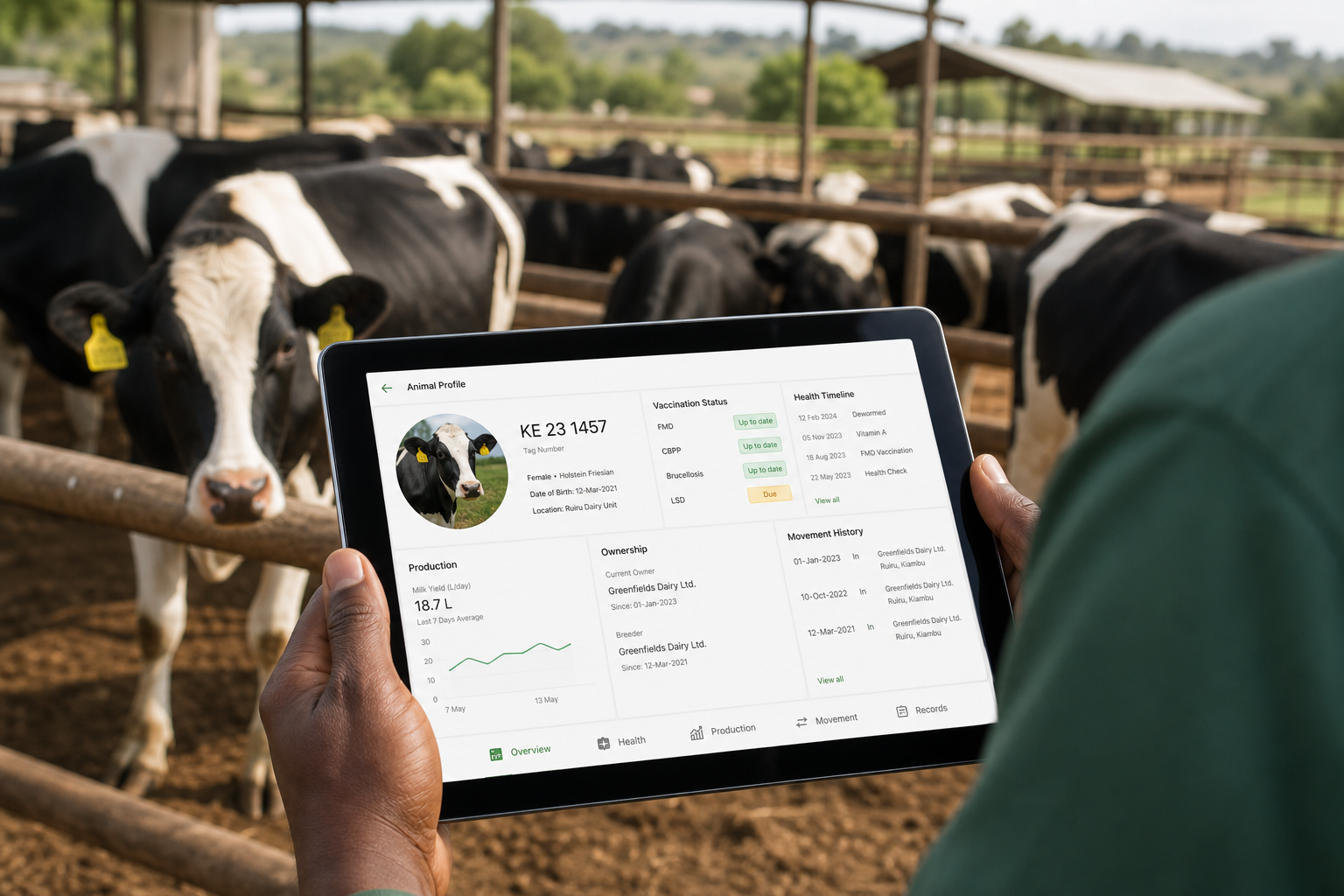
Livestock traceability software in Kenya helps farms keep clear records for animals, ownership, health work, production, sales and movement history. The goal is not simply to replace a notebook. A useful system should help a farm owner or manager understand where each animal came from, what happened during its time on the farm, what it produced, what it cost and where it was eventually sold or transferred.
Traceability has become a timely subject in 2026 as Kenya discusses stronger animal identification and digital agricultural information systems. The proposed Animal Identification and Traceability Bill, commonly discussed as ANITRAC 2026, is still a proposal and should not be presented as an enacted requirement. However, it shows why accurate animal records, vaccination history, ownership information and movement data are becoming more important for farmers, cooperatives, veterinary teams and livestock markets.
Important clarification: FAMA is an independent farm management system. This article does not claim that FAMA is approved by the Government of Kenya, connected to ANITRAC, or integrated with animal microchips. It explains the practical farm records that help livestock businesses prepare for a more traceable, data-driven market.
Why Livestock Traceability Matters in Kenya
Livestock businesses lose visibility when records are scattered across exercise books, spreadsheets, phone messages and staff memory. An animal may have a health event recorded by one worker, a sale discussed by another person and production figures stored somewhere else. When the owner needs a complete history, the information is difficult to reconcile.
A structured livestock system creates one operational record. This can improve disease follow-up, breeding decisions, production analysis, buyer confidence, farm valuation and accountability. Traceability is also useful when animals move between farms, grazing areas, markets or counties because managers can preserve a clear history instead of starting again with incomplete information.
Records a Livestock Traceability System Should Keep
- Animal identity: internal number, tag number, species, breed, sex, date of birth and current status.
- Ownership history: acquisition source, purchase date, cost, transfer details and current responsible farm account.
- Health records: vaccinations, treatments, veterinary visits, diagnoses, medicine use and follow-up dates.
- Production records: milk, eggs, weight gain, births or other outputs relevant to the farm.
- Breeding records: mating, insemination, pregnancy checks, expected dates and offspring history where the farm records them.
- Movement records: farm, paddock, market or transfer history recorded according to the farm’s own workflow.
- Sales and buyer records: sale date, buyer, price, payment status and supporting notes.
- Cost and profitability records: feed, treatment, labour and other costs connected to livestock operations.
How FAMA Supports Better Livestock Records
FAMA Farm Management System gives Kenyan farm teams a structured workspace for operational and financial records. Its livestock tools can register animals and groups, record health work and production, manage buyers and livestock sales, and connect daily activity with farm reporting. The wider platform also supports inputs, inventory, labour, salaries, expenses, machinery, harvests and management reports.
This broader view matters because traceability is not isolated from the rest of the farm. A livestock owner may need to compare production with feed and treatment costs, review sales against expenses, monitor staff activity or prepare a clearer management report. Keeping the records in one farm workspace reduces repeated entry and makes decisions easier.
Livestock Vaccination and Health Record Keeping
Vaccination records should show the animal or group treated, the date, the vaccine or health service, the responsible person and the next follow-up date where applicable. These records help farm teams avoid missed schedules and provide a clearer history when veterinary support is needed.
Digital records do not replace veterinary advice or official animal-health documentation. They support the farm’s internal management by keeping information organized and accessible to authorized users.
Animal Identification Without Overclaiming Integration
Farms can use their own internal animal numbers or existing tag references to keep records consistent. If national identification standards or approved devices apply, farmers should follow guidance from the Directorate of Veterinary Services and other relevant authorities. A private farm system should never claim official approval, government integration or device compatibility unless that connection has been formally built and verified.
How Traceability Improves Livestock Sales
Buyers are more confident when a seller can explain an animal’s identity, health work, production history and ownership. Structured records can also help the farm compare sale prices, identify profitable groups and understand which production decisions lead to better outcomes.
For cooperatives and larger farms, consistent data can improve reporting across many animals and users. Role-based access is useful because farm owners, managers, accountants and operational staff do not all need the same permissions.
Questions to Ask Before Choosing Livestock Software
- Can the system keep animal and group records that match how our farm works?
- Can authorized users record health work, production, buyers and sales?
- Does it connect livestock activity with expenses, income and management reports?
- Can the owner restrict users to the correct farm account and role?
- Can we export or print the records needed for internal review?
- What onboarding, training and support are included?
- Does the provider clearly distinguish private farm records from official government systems?
ANITRAC 2026 and Digital Livestock Records
Kenya News Agency reported in April 2026 that the proposed Animal Identification and Traceability Bill was undergoing stakeholder engagement and public participation. The proposal discusses animal identification, ownership, production and vaccination information. Separately, Taita Taveta County has reported implementation of a digital livestock management platform covering vaccination tracking, livestock movement traceability and breeding support.
These developments show the direction of travel: livestock management is becoming more data-driven. Farms do not need to make unverified compliance claims to benefit from cleaner internal records today.
- Kenya News Agency: proposed livestock traceability bill
- Kenya News Agency: Taita Taveta digital livestock rollout
- Ministry of Agriculture and Livestock Development resources
Frequently Asked Questions
What is livestock traceability software?
It is software used to organize animal identity, ownership, health, production, movement, sales and related farm records so that the history of livestock is easier to review.
Is FAMA connected to ANITRAC?
No such connection is claimed. FAMA is an independent farm management platform for operational and financial records.
Can FAMA record livestock health and production?
FAMA supports animal and group records, health work, production, buyers and livestock sales within a broader farm management workspace.
Does livestock software replace official veterinary records?
No. It supports internal farm management. Farmers should continue following official veterinary, identification and movement requirements.
Who can use livestock management software?
Livestock farms, dairy farms, mixed farms, cooperatives, farm managers, accountants and owners can use structured software where it matches their workflow.
Start Organizing Livestock Records with FAMA
Farms preparing for more accountable livestock management can start with accurate internal records. Visit FAMA Farm Management System to review the platform, pricing and onboarding options for Kenyan farm teams.
Powered by Zama Systems.