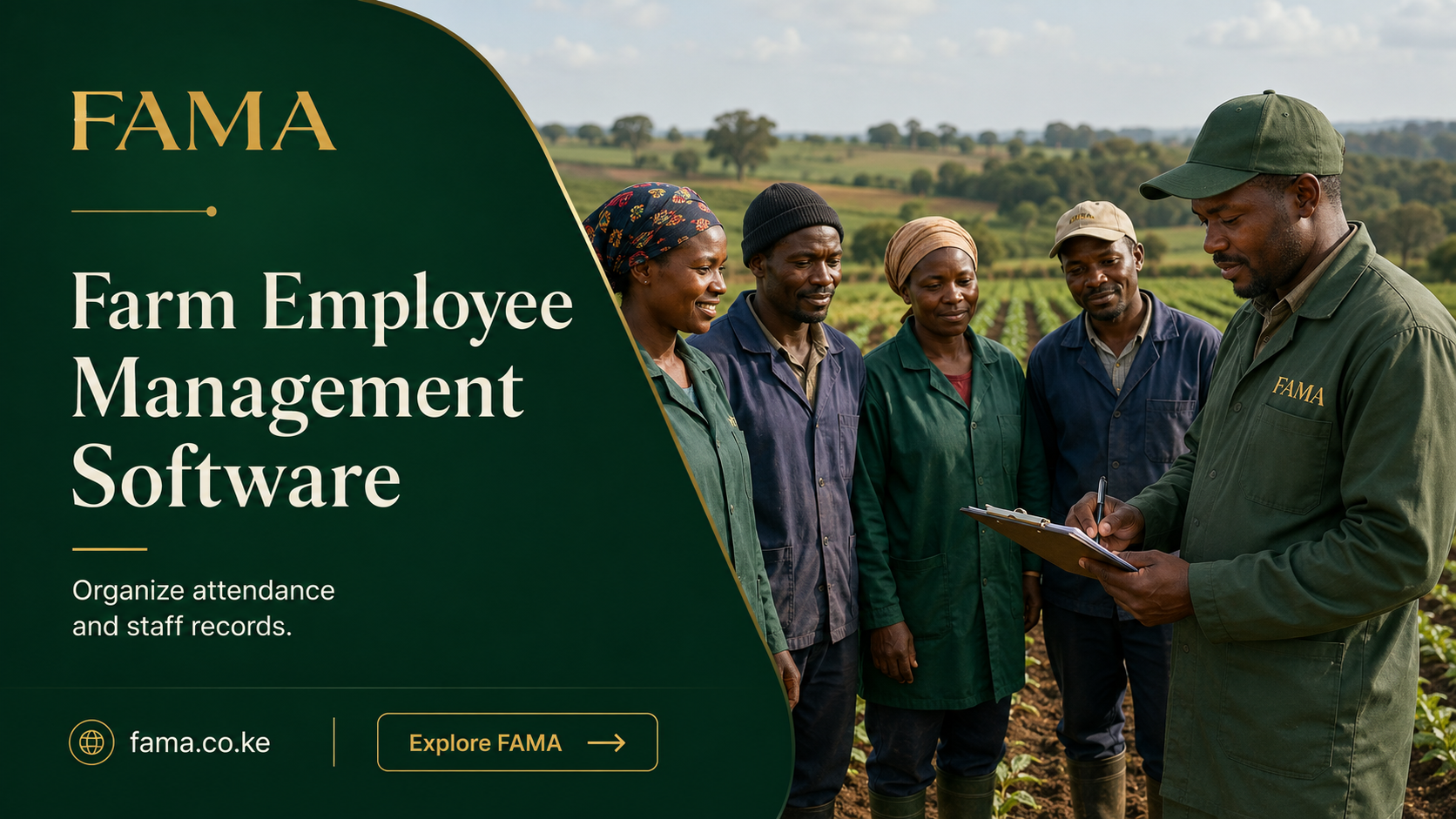
Simple Farm Worker Management for Growing Farms
Farm worker management becomes more important as a farm grows. When the farm is small, the owner may supervise most activities personally. But when the farm expands, hires more workers, manages several fields, or depends on casual labor during busy seasons, verbal instructions are no longer enough.
Good worker management helps the farm know who worked, what they did, where they worked, how much they should be paid, and whether the task was completed properly. This reduces disputes, improves productivity, and protects the farm from unnecessary labor costs.
This guide explains simple farm worker management habits that any growing farm can use. The goal is to create fairness for workers and clarity for the owner.
This article focuses on farm worker management because farm worker management gives the farm owner a clearer way to control daily work, compare results, and protect profit. When farm worker management is handled consistently, the farm becomes easier to review at the end of each week, month, and season.
Table of contents:
- Keep daily attendance records
- Assign tasks clearly
- Manage payments and advances carefully
- Why farm management records must be practical
- How digital tools improve farm accountability
- Common mistakes farms should avoid
- Using reports to plan the next season
- How FAMA supports better farm control
- Frequently asked questions
- Final thoughts
Keep daily attendance records
Attendance is the foundation of worker payment. Every worker should be recorded by name, date, worker type, arrival status, and task day. This applies to permanent workers, casual workers, supervisors, and specialized operators.
Attendance records help prevent payment disputes. If a worker claims extra days, the owner can check the record. If the farm owes a balance, the record explains why. This protects both the farm and the worker.
The attendance habit should be simple enough to follow every day. A supervisor can record attendance in the morning and confirm again when work is completed. The owner can review summaries later.
For this reason, farm worker management should be treated as a daily farm habit, not an activity that is postponed until the end of the season. Strong farm worker management helps the owner see problems early and correct them before they become expensive.
Assign tasks clearly
Workers perform better when tasks are specific. Instead of saying that workers should go to the farm, assign a clear task such as weeding Field B, harvesting tomatoes in Block 2, cleaning the dairy unit, feeding poultry house 1, or repairing an irrigation line.
A task record should include the worker or team, date, field or unit, task, expected output, supervisor, and completion status. This helps the farm know what was done and what remains pending.
Clear task records also help calculate labor cost by activity. If harvesting consumes too much labor, the farm can improve planning. If weeding is delayed often, the owner can adjust labor scheduling.
For this reason, farm worker management should be treated as a daily farm habit, not an activity that is postponed until the end of the season. Strong farm worker management helps the owner see problems early and correct them before they become expensive.
Manage payments and advances carefully
Payment records should show worker name, rate, days worked, task basis, amount earned, advances, deductions, balance, and payment date. This is especially important when workers are paid weekly or after harvest.
Advances should always be recorded. Small advances given casually can create confusion at payday. A clear record helps the worker and owner agree on the final balance.
For casual workers, the farm should record names and phone numbers where possible. This helps with future hiring and creates a history of reliable workers.
For this reason, farm worker management should be treated as a daily farm habit, not an activity that is postponed until the end of the season. Strong farm worker management helps the owner see problems early and correct them before they become expensive.
Why farm management records must be practical
A farm record only helps when it matches the way work happens on the ground. If the record is too complicated, workers will avoid it, managers will delay it, and the owner will stop trusting it. A practical farm system should capture the most important facts quickly: date, field, crop or unit, person responsible, quantity, cost, and status. Those simple details are enough to build useful reports when they are recorded consistently.
Kenyan farms often run with a mix of permanent staff, casual workers, family support, suppliers, transporters, brokers, and buyers. This creates many small transactions every week. A good record habit protects the farm from confusion because every major movement is written down before it is forgotten. The goal is not paperwork for its own sake. The goal is visibility, accountability, and better decisions.
When records are practical, they become part of the farm routine. The manager records inputs as they leave the store. The supervisor records workers when they arrive. Harvest teams record quantities before produce leaves the field. The owner reviews summaries instead of chasing scattered updates. This is how a farm begins to operate like a real business rather than a collection of urgent tasks.
This is also where farm worker management becomes useful for long-term planning. The farm can compare one period with another and decide what should be improved, repeated, reduced, or stopped.
How digital tools improve farm accountability
Digital tools help by putting farm information in one place. A notebook can disappear, get wet, tear, or remain with one person. Phone messages can be buried in conversations. Spreadsheets can be edited without a clear history. A structured farm management system creates a more reliable record because each activity can be linked to a date, user, field, worker, input, harvest, or sale.
Accountability improves when people know that work is recorded. If fertilizer is issued to a field, the quantity and receiver are visible. If workers are paid, the attendance and task record explain the amount. If produce is sold on credit, the buyer balance remains visible until payment is made. This does not remove the need for trust on the farm, but it supports trust with evidence.
Digital records also help absentee owners. Many farm owners live away from the farm or visit only during major activities. Without records, they depend on calls and verbal explanations. With a system like FAMA, the owner can review farm activity, costs, harvests, workers, and reports more easily. This makes supervision stronger even when the owner is not physically present every day.
This is also where farm worker management becomes useful for long-term planning. The farm can compare one period with another and decide what should be improved, repeated, reduced, or stopped.
Common mistakes farms should avoid
The first mistake is recording only sales and ignoring costs. Sales can look impressive, but profit depends on what was spent to produce those sales. A farm should record input costs, labor costs, fuel, transport, repairs, packaging, and small daily expenses. These details show whether a crop or livestock unit is truly profitable.
The second mistake is recording totals without details. A farm may know it spent a certain amount on labor, but not which field consumed the labor. It may know fertilizer was bought, but not where it was applied. It may know harvest was sold, but not how much came from each field. Details create insight. Totals alone often hide the real problem.
The third mistake is waiting until the end of the season. Farm records should be updated daily or weekly. When recording is delayed, people forget quantities, dates, names, prices, and reasons. Late records become estimates, and estimates can mislead the owner. The best time to record farm activity is when the activity happens.
This is also where farm worker management becomes useful for long-term planning. The farm can compare one period with another and decide what should be improved, repeated, reduced, or stopped.
Using reports to plan the next season
The best farm decisions usually come after comparing seasons. A farmer can compare input costs, worker costs, yields, prices, buyer reliability, losses, and profit. This comparison reveals whether performance is improving or declining. It also shows which changes produced better results, such as a new seed variety, earlier planting, better spraying discipline, or improved buyer selection.
Reports help farmers avoid repeating expensive mistakes. If a crop has high sales but poor profit, the farm may need to reduce cost, negotiate better prices, or plant less of that crop. If a field produces low yields every season, the owner may need soil testing, drainage improvement, irrigation changes, or a different crop. If labor costs keep rising, task planning and supervision may need attention.
Planning with reports also improves cash flow. The owner can estimate how much money is needed for seed, fertilizer, chemicals, labor, fuel, and transport before the season begins. This reduces emergency borrowing and last-minute buying. A farm that plans with real numbers is more resilient than one that waits for problems to appear.
This is also where farm worker management becomes useful for long-term planning. The farm can compare one period with another and decide what should be improved, repeated, reduced, or stopped.
How FAMA supports better farm control
FAMA is designed for farms that want better control over daily operations. It helps owners organize farm setup, workers, leases, inputs, machinery, harvests, sales, expenses, and reports. Instead of depending only on memory, notebooks, and scattered messages, the farm can keep structured records that are easier to review.
The value of FAMA is strongest when the farm uses it consistently. Every input issue, worker task, harvest entry, sale, buyer balance, and expense becomes part of a bigger picture. The owner can then see what is happening across the farm and make decisions with more confidence. Better records do not make farming easy, but they make farm management clearer.
For growing farms, this clarity matters. More land, more workers, more crops, and more buyers create more complexity. FAMA helps the farm stay organized as operations expand. It supports better supervision, better reporting, and better accountability, which are all necessary for long-term farm success.
This is also where farm worker management becomes useful for long-term planning. The farm can compare one period with another and decide what should be improved, repeated, reduced, or stopped.
Step-by-step way to start using this on your farm
Start with one record area instead of trying to fix everything in one day. A farm can begin with farm worker management and then add workers, inputs, harvests, sales, and reports as the team becomes comfortable. The most important thing is consistency, because consistent farm worker management creates better information for every farm decision.
Choose one person responsible for daily updates. This may be the owner, farm manager, storekeeper, supervisor, or administrator. The person should record activity close to the time it happens so the information remains accurate.
Review the records every week. A weekly review helps the owner notice missing entries, unusual spending, delayed tasks, low stock, buyer balances, or weak field performance. Small corrections made weekly are easier than big corrections made after a season is finished, and weekly farm worker management reviews keep the farm disciplined.
Use the reports to decide the next action. If the report shows high input costs, review stock usage. If labor cost is high, review task planning. If harvest loss is high, review handling and transport. If buyer balances are high, improve collection follow-up.
Helpful links for farm owners
Farm owners can learn more about FAMA and farm management tools from the FAMA website, the FAMA features page, and the FAMA contact page. For broader agriculture information, farmers may also review resources from the State Department for Agriculture and the Kenya Agricultural and Livestock Research Organization.
Frequently asked questions
Why is farm worker management important?
Farm worker management is important because it helps the owner understand what is happening on the farm instead of relying on memory. It supports better planning, stronger accountability, and more accurate profit decisions.
Can a small farm use these records?
Yes. Small farms benefit from records because even small costs, losses, and buyer balances affect profit. A simple system can grow as the farm grows.
How often should farm records be updated?
Records should be updated daily or whenever an activity happens. Weekly review is useful, but waiting until the end of the month or season often leads to forgotten details.
Does FAMA replace notebooks completely?
FAMA can reduce dependence on notebooks by keeping structured digital records. Some farms may still keep backup notes, but the main goal is to have one reliable place for farm information.
Final thoughts
A farm becomes easier to manage when information is clear. The owner does not have to guess where money went, which field performed best, which worker was paid, or which buyer still owes money. Good records and reports turn farm activity into useful management knowledge.
The farms that improve fastest are usually the farms that learn from their own numbers. They record what happened, review the results, and adjust the next decision. With FAMA, that process becomes more organized and easier to repeat.
If your farm is growing or you want better control, start improving farm worker management today. The earlier you build the habit, the easier it becomes to protect profit, reduce waste, and manage the farm like a serious business.
For practical farm management, the key is to keep improving the record habit until it becomes part of daily work. The farm team should know what to record, when to record it, and why the information matters. Over time, those simple records help the owner see costs, production, sales, worker activity, and performance more clearly.