Farm payroll software in Kenya is most useful when it starts before payday. The accuracy of a salary or casual-labour payment depends on earlier records: who the worker is, which pay arrangement applies, whether the person attended, what allowance or advance was approved, and which deduction is supported. When supervisors keep attendance on paper, advances in a notebook and salaries in a separate spreadsheet, the accountant spends month-end reconstructing events rather than reviewing a clear payroll trail.
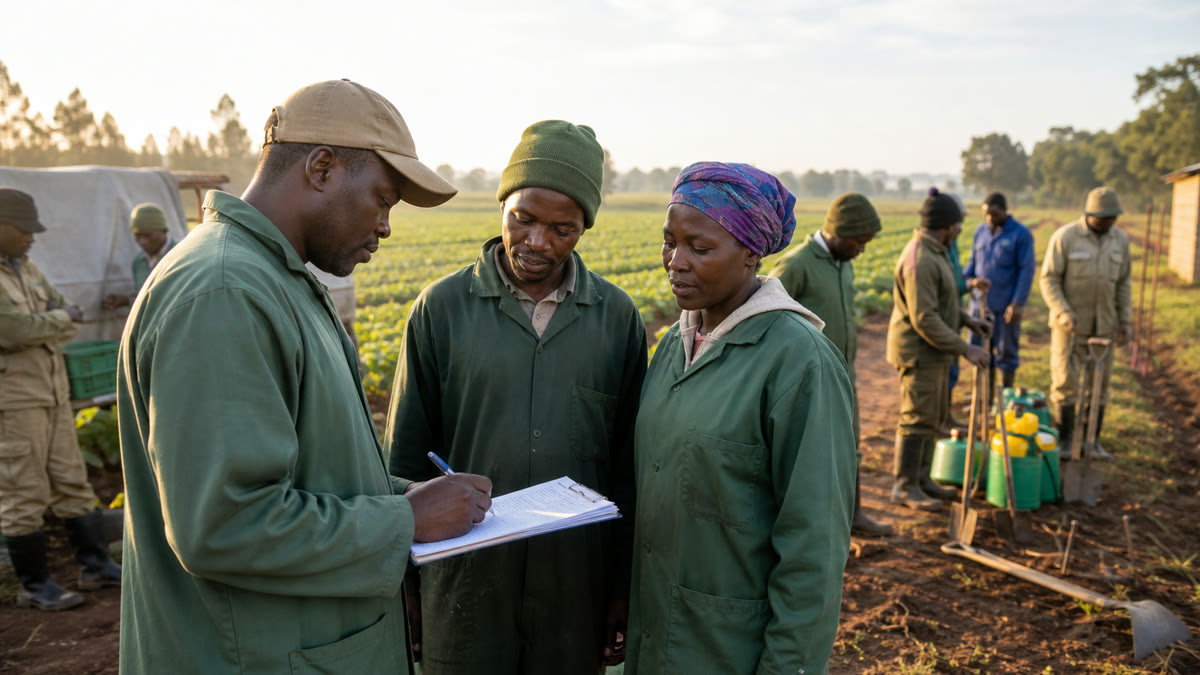
FAMA supports staff profiles, attendance, salary records, allowances, casual labour, advances, deductions, salary slips and payroll reports inside the same farm workspace used for operations and accounting. It gives owners, supervisors and accountants a structured process. It does not decide employment terms, replace professional payroll advice or make a farm compliant merely because records exist.
Why farm labour records break down
Farm teams often include permanent staff, seasonal workers, casual labourers, drivers, store staff, security personnel and supervisors. Their work may change with planting, spraying, harvesting, livestock routines or machinery schedules. A paper attendance sheet can show a name without identifying the correct worker. A supervisor may send a total number of days by message, while accounts holds a different rate. An advance may be paid mid-month but missed during salary preparation. The resulting dispute appears to be about payroll, although the real weakness began with attendance or approval.
A stronger process keeps identity, attendance and approved pay adjustments connected. Each role contributes its part: the supervisor records attendance, the accountant reviews salary and advance information, and the farm owner reviews totals and reports. That division of work is easier to manage when all records belong to one tenant-isolated farm account.
A practical attendance-to-payroll workflow
1. Build a clean staff directory
Create one active profile for each worker. Use consistent names and identifiers, record the staff category and status, and note the salary type or relevant work arrangement used by the farm. Drivers may also be associated with machinery where that supports operational responsibility. Duplicate or outdated staff entries should be resolved before attendance and salary records are imported.
2. Agree on who records attendance
Attendance should be entered by an assigned role and at a predictable time. The record needs the worker, date and attendance status used by the farm. Supervisors should not wait until payroll day to remember a full month. A short daily discipline is more dependable than a hurried retrospective list.
3. Review attendance exceptions
Before payroll preparation, the supervisor and accountant should review missing days, duplicate entries and unusual patterns. The purpose is not to infer why a worker was absent; it is to resolve incomplete records using the farm’s approved process. Corrections should be made by authorized users and supported by an explanation where needed.
4. Record salary components and casual labour
FAMA supports salary records, allowances and casual-labour payments. The farm should apply its documented terms consistently and distinguish recurring salary information from a one-off approved allowance or casual job. A payroll system should show how the final amount was formed rather than preserving only the number paid.
5. Capture advances and deductions before approval
Staff advances are a frequent source of disagreement because the payment happens earlier than the deduction. Record the advance when it is issued, including the worker, amount and date, then use the agreed repayment information during salary review. Other deductions should have an approved basis and should never be invented by the software operator.
6. Review, approve and issue the salary record
The accountant should compare the draft salary record with attendance, allowances, advances and deductions before approval. The farm owner or designated reviewer can then check totals and exceptions. Salary slips and payroll reports provide a clearer explanation to workers and management than a list of net amounts alone.
7. Connect payroll to farm accounting
Labour is both a people responsibility and a farm cost. FAMA brings staff and payroll records beside income, expenses, cashbook entries and profit/loss reporting. This helps management see payroll in the wider operating picture without maintaining unrelated records in several places.
What FAMA can help the farm record and report
The FAMA staff and payroll module supports the operational trail from worker setup to salary review. Relevant records and outputs include:
- staff profiles, categories, status and assigned responsibilities;
- daily attendance records and attendance reports;
- salaries, allowances and casual-labour payments;
- staff advances, repayments and deductions;
- salary slips and payroll reports;
- income, expense and cashbook context through FAMA accounting and reports; and
- printable or exportable reports for authorized review.
These records improve visibility, but they depend on good definitions. The farm must decide which worker list is authoritative, who may correct attendance, who approves advances and when payroll closes. Software will not settle a disputed employment term that management never documented.
Questions to ask when buying farm payroll software
A useful demonstration should follow one worker through a complete pay period. Ask the provider to show:
- how permanent staff and casual-labour records are distinguished;
- how attendance enters the review process;
- how allowances, advances, repayments and deductions are recorded;
- which users can enter, review and see sensitive payroll information;
- how salary slips and attendance, salary and advance reports are produced;
- how payroll costs sit beside other farm expenses and reports;
- how inactive workers are retained without appearing as current staff;
- how records can be printed or exported; and
- how each subscribing farm’s workforce data is kept inside its own workspace.
Do not rely on a generic statement that the system “does payroll.” Bring a real anonymized scenario: one worker, several attendance days, an allowance, an advance and the expected salary explanation. The provider should demonstrate each step and identify any part that remains a management or compliance responsibility.
Implementation steps for a Kenyan farm team
- Document the current workflow. Identify who recruits, records attendance, authorizes advances, prepares salary records and approves payment.
- Clean the staff list. Separate active, inactive, permanent, seasonal and casual records according to the farm’s actual arrangements.
- Confirm opening advances. Review outstanding balances with supporting records before transferring them.
- Create role-based users. Give supervisors, accountants, managers and owners access suited to their responsibilities.
- Choose a payroll cut-off. State when attendance corrections and approved adjustments must be submitted.
- Run one test period. Compare FAMA’s records with the farm’s approved calculation and investigate every difference.
- Explain the process to workers. Tell staff where attendance questions and advance disputes should be raised.
- Review monthly. Check missing attendance, inactive staff, unusual adjustments, outstanding advances and total labour cost.
Record keeping and legal responsibility
Payroll records contain employment and personal information. Kenyan employers should understand their obligations under the current law and obtain qualified advice for their circumstances. The official Employment Act published by Kenya Law includes employer record-keeping provisions. The International Labour Organization Code of Practice on Safety and Health in Agriculture provides broader workplace-management guidance. These sources do not turn FAMA into legal, tax or human-resources advice; they help a farm identify matters that require its own compliant policies.
What good owner oversight looks like
The owner does not need to edit every attendance entry. A better control is a short exception review: workers with incomplete days, salary changes, large allowances, new advances, repeated corrections, inactive profiles and a material change in total payroll. The detailed record remains available when the owner needs to investigate. This keeps responsibility with the operating roles while preserving management visibility.
Role-based access also reduces unnecessary exposure. A supervisor can focus on attendance and labour records, an accountant on salaries and advances, and the farm owner on the full workspace. Access should still be reviewed whenever someone changes role or leaves the farm.
Frequently asked questions
Can FAMA manage farm worker attendance?
Yes. FAMA supports attendance records and reports alongside staff profiles, salary records and farm operations.
Can FAMA record casual labour?
Yes. Casual-labour payments are among the demonstrated staff and payroll records. The farm remains responsible for applying the correct terms and approvals.
How are staff advances handled?
FAMA supports advances, repayments and deductions so the farm can retain a traceable record before salary review. Opening balances should be verified during setup.
Does using payroll software guarantee legal compliance?
No. The software organizes records and calculations based on entered information. Employers remain responsible for lawful terms, deductions, records, privacy and professional advice.
Where can I learn about the complete platform?
Visit the FAMA home page, compare the available FAMA features, and see how labour connects to the wider farm management system.
Bring one real attendance-to-payroll scenario
Request a focused FAMA demonstration using anonymized records for one permanent worker or casual team: attendance, agreed salary basis, one allowance, one advance and the expected salary slip. A real example makes it easier to test fit, roles and reporting.