Modern agriculture is undergoing a remarkable transformation. As farms become larger, markets become more competitive, and climate conditions become increasingly unpredictable, traditional methods of record-keeping are no longer sufficient. This is where Farm Management Information Systems (FMIS) become essential. A Farm Management Information System helps farmers collect, organize, analyze, and utilize farm data to make informed decisions that improve productivity, profitability, and sustainability.
Whether you manage a small family farm or oversee thousands of acres of commercial agriculture, implementing a Farm Management Information System can revolutionize your farming operations. From tracking crops and livestock to monitoring finances, labor, machinery, and inventory, an FMIS provides a centralized platform that simplifies farm management.
At FAMA (Farm Management System), we help farmers across Kenya and beyond embrace digital agriculture through powerful, easy-to-use farm management solutions.
Website: https://fama.co.ke
Contact: +254 725345345
What is a Farm Management Information System?
A Farm Management Information System (FMIS) is a digital software platform designed to collect, store, process, and analyze agricultural information to support better farm management decisions.
Instead of maintaining numerous notebooks, spreadsheets, and paper records, farmers can use a Farm Management Information System to centralize every aspect of farm operations in one secure platform.
A comprehensive Farm Management Information System helps farmers manage:
- Crop production
- Livestock management
- Employee records
- Machinery maintenance
- Inventory
- Farm finances
- Weather monitoring
- Irrigation schedules
- Harvest planning
- Sales management
- Supplier records
- Customer management
- Regulatory compliance
- Farm reports
- Performance analytics
The primary goal of every Farm Management Information System is to improve efficiency while reducing operational costs and maximizing profitability.
Why Farm Management Information Systems Are Becoming Essential
Agriculture today is much more than planting seeds and harvesting crops. Farmers must balance numerous responsibilities every day.
These include:
- Managing employees
- Monitoring production
- Tracking expenses
- Controlling inventory
- Scheduling activities
- Forecasting yields
- Managing risks
- Meeting quality standards
- Maintaining machinery
- Keeping financial records
Without a reliable Farm Management Information System, managing all these tasks manually becomes time-consuming and prone to costly mistakes.
A digital Farm Management Information System allows farmers to make faster, data-driven decisions using real-time information.
The Evolution of Farm Management Information Systems
Traditional farming relied heavily on personal experience and handwritten records.
As technology advanced, farms adopted spreadsheets for record keeping.
Today, modern Farm Management Information Systems combine multiple technologies, including:
- Cloud computing
- Artificial Intelligence
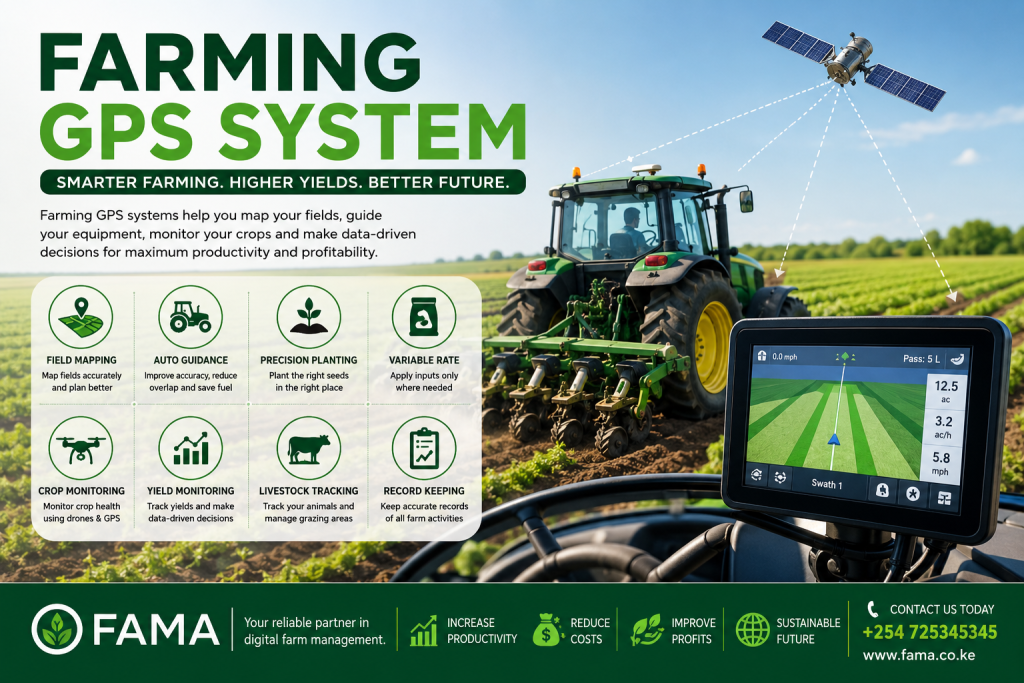
- GPS technology
- IoT sensors
- Satellite imagery
- Mobile applications
- Data analytics
- Automation
These technologies enable farmers to monitor every aspect of their operations remotely.
Key Components of Farm Management Information Systems
A complete Farm Management Information System consists of several integrated modules working together.
Crop Management
Crop management is one of the most important features within any Farm Management Information System.
Farmers can monitor:
- Planting dates
- Seed varieties
- Fertilizer application
- Irrigation
- Pest control
- Disease outbreaks
- Harvest schedules
- Crop yields
Having all crop records in one Farm Management Information System allows better planning and forecasting.
Livestock Management
Livestock farms benefit greatly from a Farm Management Information System.
The system helps manage:
- Animal identification
- Vaccination schedules
- Breeding records
- Feed consumption
- Milk production
- Weight tracking
- Veterinary treatments
- Mortality records
With a digital Farm Management Information System, livestock performance becomes easier to monitor.
Financial Management
Every successful farm operates like a business.
A Farm Management Information System enables farmers to monitor:
- Income
- Expenses
- Cash flow
- Budgets
- Loans
- Profit margins
- Sales
- Purchases
- Financial reports
Accurate financial data helps farmers make better investment decisions.
Inventory Management
Inventory is often overlooked in traditional farming.
A Farm Management Information System tracks:
- Fertilizers
- Seeds
- Chemicals
- Animal feeds
- Packaging materials
- Fuel
- Spare parts
- Farm equipment
Real-time inventory reduces wastage and prevents stock shortages.
Machinery Management
Farm equipment represents a significant investment.
A Farm Management Information System helps monitor:
- Maintenance schedules
- Fuel consumption
- Repair history
- Equipment utilization
- Service reminders
- Machine availability
Proper maintenance extends machinery lifespan.
Labor Management
Managing farm workers manually can be difficult.
A Farm Management Information System simplifies:
- Employee records
- Attendance
- Payroll
- Daily assignments
- Performance tracking
- Leave management
Efficient labor management improves productivity.
Benefits of Farm Management Information Systems
Better Decision Making
Perhaps the greatest advantage of a Farm Management Information System is informed decision-making.
Instead of relying on assumptions, farmers use real data.
This results in:
- Better planting decisions
- Improved harvesting schedules
- Accurate budgeting
- Reduced waste
- Higher profitability
Improved Productivity
A Farm Management Information System eliminates unnecessary paperwork.
Automation enables farmers to focus more on production rather than administration.
Daily farm operations become faster and more organized.
Cost Reduction
By tracking every expense, a Farm Management Information System helps farmers identify unnecessary costs.
Examples include:
- Excess fertilizer usage
- Fuel wastage
- Overstocked inventory
- Equipment downtime
- Labor inefficiencies
Reducing operational costs directly improves farm profits.
Increased Profitability
When farms become more efficient, profitability naturally increases.
A Farm Management Information System supports higher profits through:
- Better planning
- Accurate budgeting
- Improved yields
- Reduced losses
- Efficient resource allocation
Better Record Keeping
Maintaining years of paper records is difficult.
A Farm Management Information System stores information securely in digital format.
Farmers can retrieve records within seconds.
Historical data also helps identify production trends.
Improved Compliance
Agricultural regulations continue evolving.
A Farm Management Information System helps farmers maintain records required by:
- Government agencies
- Certification bodies
- Export markets
- Food safety authorities
Compliance becomes easier with automated reporting.
Features of a Modern Farm Management Information System
Today’s leading Farm Management Information Systems provide advanced features including:
Dashboard
A centralized dashboard gives farmers a complete overview of operations.
It displays:
- Farm performance
- Weather updates
- Financial summaries
- Crop status
- Livestock health
- Inventory alerts
Mobile Accessibility
Farmers no longer need to sit in an office.
Modern Farm Management Information Systems allow access from smartphones and tablets.
Farm managers can update records directly from the field.
Cloud Storage
Cloud technology keeps farm information secure.
Benefits include:
- Automatic backups
- Remote access
- Multi-user collaboration
- Enhanced security
- Data recovery
Analytics and Reporting
A powerful Farm Management Information System generates reports such as:
- Profit reports
- Crop yield analysis
- Expense reports
- Labor reports
- Inventory reports
- Machinery utilization
- Financial performance
Reports support better planning.
Task Scheduling
Farm activities require proper timing.
A Farm Management Information System schedules:
- Irrigation
- Planting
- Harvesting
- Fertilizer application
- Pesticide spraying
- Equipment servicing
Automated reminders reduce missed tasks.
Industries That Benefit from Farm Management Information Systems
A Farm Management Information System is suitable for nearly every agricultural enterprise, including:
- Dairy farms
- Poultry farms
- Pig farms
- Sheep farms
- Goat farms
- Mixed farms
- Greenhouse farms
- Coffee farms
- Tea farms
- Maize farms
- Wheat farms
- Rice farms
- Sugarcane farms
- Fruit orchards
- Vegetable farms
- Flower farms
- Aquaculture farms
Regardless of farm size, a Farm Management Information System improves operational efficiency.
Why Kenyan Farmers Need Farm Management Information Systems
Agriculture remains one of Kenya’s most important economic sectors. However, many farmers still rely on manual record-keeping, making it difficult to monitor performance, forecast production, and manage resources effectively.
A modern Farm Management Information System helps Kenyan farmers overcome challenges such as:
- Rising input costs
- Climate variability
- Labor management
- Market competition
- Poor record keeping
- Inefficient resource utilization
- Limited production forecasting
By adopting a Farm Management Information System, farmers can digitize operations, improve transparency, and make data-driven decisions that support long-term growth.
Why Choose FAMA Farm Management System?
FAMA provides a comprehensive Farm Management Information System tailored to the needs of modern farmers. The platform is designed to simplify day-to-day farm operations while giving farm owners complete visibility into every aspect of their business.
With FAMA, you can:
- Manage crop and livestock operations in one platform.
- Track farm expenses and income with ease.
- Monitor inventory and machinery usage.
- Generate detailed reports for better decision-making.
- Access your farm data anytime, anywhere.
- Improve productivity and reduce operational costs.
Whether you operate a small farm or a large commercial agricultural enterprise, FAMA offers the tools you need to streamline management and increase profitability.
Website: https://fama.co.ke
Call or WhatsApp: +254 725345345