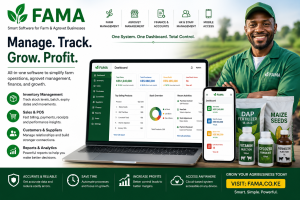
Digital Management System for Agrovets: Intro
Agrovet businesses play a critical role in Kenya’s agricultural economy. Every day, farmers depend on agrovets for animal feeds, veterinary drugs, seeds, fertilizers, pesticides, farm tools, and advisory services. However, many agrovet owners still rely on manual record keeping, notebooks, spreadsheets, and fragmented systems to manage their operations. As competition increases and customer expectations rise, manual processes often create stock losses, reporting errors, delayed decisions, and poor customer experiences.
This is where a Digital Management System for Agrovets becomes valuable. Modern agrovet businesses need accurate stock records, real-time sales visibility, customer purchase history, supplier management, and financial reporting. A properly implemented Digital Management System for Agrovets like https://fama.co.ke provides all these capabilities from a centralized platform.
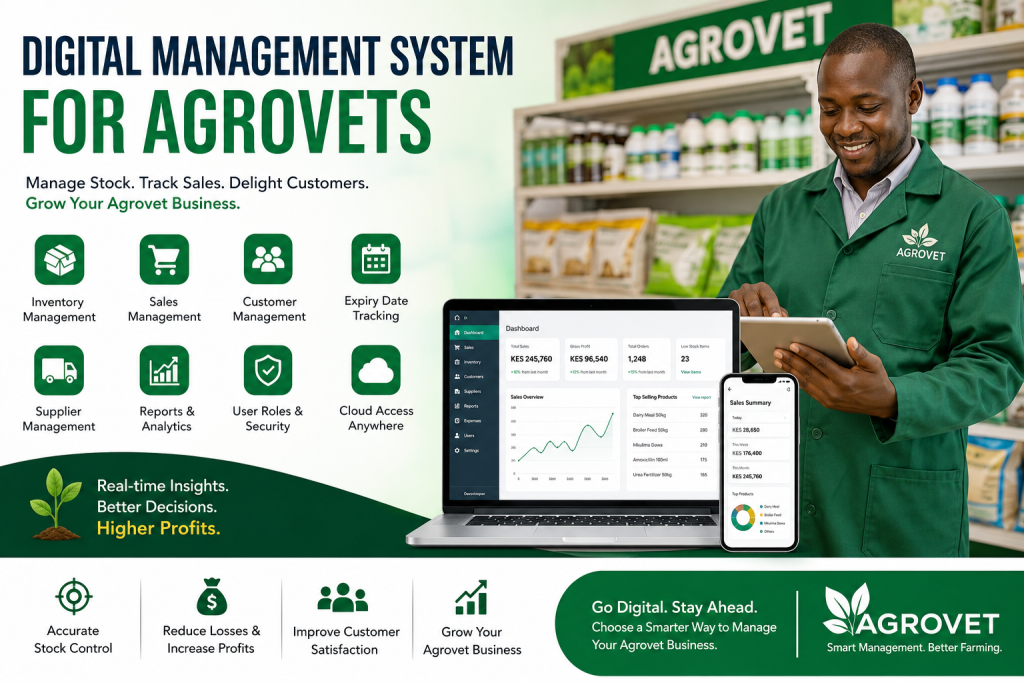
Across Kenya, agrovet businesses are increasingly investing in technology to improve operational efficiency and reduce avoidable losses. Whether operating a single outlet in a rural trading center or managing multiple branches across counties, a Digital Management System for Agrovets can help streamline operations while improving accountability and profitability.
For agrovet owners seeking sustainable growth, digital transformation is no longer optional. It has become a practical business requirement that helps businesses remain competitive in a rapidly changing agricultural marketplace.
What Is a Digital Management System for Agrovets?
A Digital Management System for Agrovets is software designed specifically to help agrovet businesses manage daily operations electronically. Instead of recording sales manually and maintaining physical stock books, the system automates inventory management, sales processing, customer records, supplier tracking, and reporting.
The software acts as the operational backbone of an agrovet business. Every transaction updates inventory automatically, every purchase is recorded accurately, and management reports become available instantly.
Unlike generic accounting software, a Digital Management System for Agrovets addresses challenges unique to agricultural retail businesses. It can manage products with expiry dates, track veterinary medicines, monitor fertilizer stock, manage feed inventory, and provide detailed sales analysis.
The goal is simple: give agrovet owners complete visibility into their businesses while reducing human errors and administrative workload.
Why Kenyan Agrovets Are Moving Toward Digital Systems
The agricultural sector is becoming more data-driven. Farmers expect faster service, better product availability, and professional customer experiences.
When an agrovet operates manually, several challenges emerge. Stock discrepancies become common. Employees may forget to record sales. Expired products remain unnoticed. Management struggles to understand which products generate the highest revenue.
A Digital Management System for Agrovets eliminates many of these challenges by creating a structured workflow.
Business owners can instantly view:
- Available stock levels
- Fast-moving products
- Slow-moving inventory
- Daily sales reports
- Employee performance
- Customer purchasing patterns
- Supplier transactions
- Profitability reports
This visibility enables better decision-making and supports long-term growth.
Core Features of a Digital Management System for Agrovets
A quality Digital Management System for Agrovets should include inventory management capabilities that provide real-time stock visibility. Every sale automatically updates stock quantities, helping prevent stockouts and overstocking.
Sales management functionality enables staff to process transactions quickly while generating receipts and maintaining accurate records.
Customer management features allow businesses to track customer purchase history, manage credit accounts, and improve customer relationships.
Supplier management tools help agrovet owners monitor purchases, outstanding balances, and supplier performance.
Financial reporting capabilities provide insights into revenue trends, expenses, and profitability.
Many modern systems also include mobile access, allowing business owners to monitor operations remotely.
For businesses looking for comprehensive management solutions, platforms such as Fama Software provide business automation tools designed to improve operational efficiency.
Inventory Control: The Heart of Agrovet Success
Inventory represents one of the largest investments in any agrovet business. Poor inventory management directly affects profitability.
A Digital Management System for Agrovets helps maintain accurate stock records across all product categories. Whether selling pesticides, fertilizers, veterinary drugs, seeds, or animal feeds, the system provides real-time inventory updates.
Managers can quickly identify low-stock items and reorder before shortages occur.
The system also helps identify dead stock. Products that remain unsold for extended periods tie up working capital and reduce business flexibility.
With better visibility, agrovet owners can make informed purchasing decisions and optimize stock investment.
Managing Expiry Dates and Regulatory Compliance
Many agrovet products have expiry dates. Veterinary medicines, vaccines, pesticides, and other agricultural chemicals require careful monitoring.
A Digital Management System for Agrovets can generate alerts when products approach expiration. This allows businesses to create promotions or adjust purchasing strategies before products become unusable.
Expiry tracking reduces waste while helping businesses maintain compliance with industry regulations.
For agrovet businesses handling regulated products, accurate records are essential for audits and inspections.
Improving Customer Service Through Digitalization
Customer satisfaction significantly influences repeat business.
A Digital Management System for Agrovets enables faster checkout processes and better customer record management.
Staff can access customer purchase histories instantly, helping them provide personalized recommendations.
For example, if a farmer regularly purchases dairy feed, the system can help staff identify suitable supplements or related products.
This improves customer experience while creating opportunities for increased sales.
Modern customer management approaches are discussed extensively by organizations such as Salesforce and HubSpot.
Better Decision-Making Through Real-Time Reports
One major advantage of a Digital Management System for Agrovets is reporting.
Business owners no longer need to wait until month-end to understand performance.
Reports can show:
- Daily sales
- Weekly revenue
- Monthly trends
- Product performance
- Branch comparisons
- Employee productivity
- Customer buying behavior
These insights support strategic decision-making and help businesses identify growth opportunities.
Organizations such as Microsoft Power BI continue to demonstrate the importance of business intelligence and reporting for modern organizations.
Multi-Branch Agrovet Management
Many agrovet businesses expand into multiple locations as they grow.
Managing multiple branches manually becomes increasingly difficult.
A Digital Management System for Agrovets centralizes operations and provides visibility across all locations.
Business owners can compare branch performance, transfer stock between outlets, and monitor overall business health from a single dashboard.
This centralized management approach improves consistency and accountability.
Employee Accountability and Fraud Reduction
Internal losses can significantly impact profitability.
Without proper controls, businesses may experience unauthorized discounts, missing stock, or unrecorded sales.
A Digital Management System for Agrovets creates accountability by recording every transaction along with the responsible user.
Managers can review sales activities, monitor refunds, and identify unusual patterns.
This transparency discourages fraud and strengthens operational control.
Integration With Financial Management Processes
Financial accuracy is essential for sustainable growth.
A Digital Management System for Agrovets integrates sales and inventory records with financial reporting.
Business owners gain clearer visibility into:
- Revenue performance
- Operating expenses
- Outstanding debts
- Cash flow
- Profitability trends
Reliable financial information supports budgeting, expansion planning, and investment decisions.
Businesses seeking broader financial management solutions may also explore Dexa Business Software for workflow automation and reporting.
Supporting Data-Driven Growth
Growth requires information.
Without reliable data, expansion decisions become risky.
A Digital Management System for Agrovets provides historical performance records that help business owners evaluate trends and opportunities.
Managers can determine which products generate the highest revenue, identify seasonal demand patterns, and allocate resources more effectively.
This data-driven approach improves planning accuracy and business resilience.
Cloud-Based Accessibility
Many modern agrovet software solutions operate in the cloud.
Cloud access enables business owners to monitor operations from anywhere with an internet connection.
Whether traveling, attending supplier meetings, or managing multiple locations, owners maintain visibility into daily operations.
Cloud systems also improve data security by reducing dependence on local devices.
Industry leaders such as Google Cloud and Amazon Web Services continue to promote cloud-based business solutions across industries.
The Financial Impact of Digitalization
Many agrovet owners initially hesitate to invest in software because they focus on implementation costs.
However, the real question is whether the system helps reduce losses and improve efficiency.
Consider an agrovet experiencing inventory discrepancies worth KES 15,000 monthly due to manual errors and poor tracking. Over twelve months, this represents KES 180,000 in avoidable losses.
If digital inventory controls reduce these losses significantly, the investment may pay for itself within a relatively short period.
The exact results vary by business size, operational discipline, and implementation quality, but improved visibility frequently creates measurable operational benefits.
Common Challenges During Implementation
Despite the benefits, implementation is not always smooth.
Some employees may resist change because they are accustomed to manual processes.
Data migration can take time, especially for businesses with years of historical records.
Training requirements may temporarily slow operations during the transition period.
Internet connectivity issues can affect cloud-based systems in some regions.
These challenges should be anticipated and addressed through planning, training, and ongoing support.
Risks and How to Mitigate Them
Every technology investment carries risks.
One common risk is selecting software that lacks agrovet-specific functionality. Businesses should evaluate solutions carefully before committing.
Another risk involves inadequate staff training. Even excellent software can fail if employees do not understand how to use it effectively.
Data security concerns also require attention. Businesses should choose providers with strong security measures and reliable backup systems.
Poor implementation planning may result in operational disruptions. A phased rollout often reduces implementation challenges.
Regular training, vendor support, and process reviews help maximize success.
Is a Digital Management System for Agrovets Worth It?
For most growing agrovet businesses, the answer is yes.
Manual processes may appear inexpensive initially, but hidden costs accumulate over time. Stock losses, reporting delays, employee inefficiencies, and poor visibility can significantly affect profitability.
A Digital Management System for Agrovets provides structure, accountability, and operational insight.
Businesses that process numerous daily transactions, manage diverse inventory, or operate multiple locations typically experience the greatest benefits.
However, success depends on selecting the right solution and committing to proper implementation.
Software alone does not solve operational problems. Effective management practices remain essential.
Choosing the Right Digital Management System for Agrovets
Not all software solutions are created equally.
When evaluating options, agrovet owners should consider ease of use, inventory capabilities, reporting features, scalability, customer support, and customization options.
The system should support future growth rather than simply addressing current requirements.
Businesses should also assess vendor reliability and long-term product development plans.
Useful business technology resources can be found through Oracle NetSuite, Zoho, and QuickBooks.
Why More Kenyan Agrovet Businesses Are Investing in Digital Solutions
The Kenyan agricultural sector continues to evolve. Farmers increasingly expect professionalism, product availability, and efficient service.
As competition grows, agrovet businesses that embrace technology gain advantages in operational efficiency and customer experience.
A Digital Management System for Agrovets helps businesses improve inventory control, strengthen accountability, enhance reporting, and support growth.
Rather than reacting to problems after they occur, owners can proactively manage operations using real-time information.
This shift from reactive management to data-driven decision-making often becomes a major competitive advantage.
Advanced Customer Relationship Management for Agrovet Businesses
One area that many agrovet owners overlook is customer relationship management. While inventory and sales often receive the most attention, customer retention is equally important for long-term profitability. A Digital Management System for Agrovets helps businesses build stronger relationships with farmers by maintaining detailed customer records and purchase histories.
When customer information is stored digitally, staff can quickly identify previous purchases, preferred products, and buying patterns. For example, a dairy farmer who regularly purchases animal feed, mineral supplements, and veterinary products can be served more efficiently because the system already contains historical records. This creates a more personalized customer experience and increases customer loyalty.
A Digital Management System for Agrovets also makes it easier to manage customer credit accounts. Many agrovet businesses extend credit to trusted farmers, but manual tracking often leads to confusion and delayed collections. Digital records provide accurate balances, payment histories, and due dates, helping businesses manage receivables more effectively while reducing disputes.
Supplier Management and Procurement Efficiency
Successful agrovet businesses depend heavily on reliable suppliers. Managing supplier relationships manually can become difficult as the business grows and product categories expand.
A Digital Management System for Agrovets centralizes supplier information, making procurement more organized and transparent. Business owners can track purchase orders, delivery timelines, supplier pricing, and payment records from a single platform.
The system also helps compare supplier performance. Owners can identify suppliers that consistently deliver products on time and maintain competitive pricing. This information becomes valuable when negotiating better terms or deciding where to source inventory.
Procurement planning also improves significantly. Instead of waiting until products run out, managers can use stock reports to forecast future demand and place orders proactively. This minimizes stock shortages that could otherwise drive customers to competitors.
Mobile Accessibility and Business Monitoring
Modern business owners are increasingly mobile. Many agrovet owners spend time visiting farms, meeting suppliers, attending agricultural exhibitions, or managing multiple branches. A Digital Management System for Agrovets allows them to remain connected to their operations regardless of location.
Using a smartphone, tablet, or laptop, owners can monitor sales performance, review inventory levels, approve transactions, and access management reports. This flexibility reduces dependence on physical presence at the business premises.
Remote monitoring also improves response times. If a branch experiences unexpected stock shortages or unusual sales activity, management can take corrective action immediately rather than discovering problems days or weeks later.
Competitive Advantage in a Digital Agricultural Economy
Agriculture is becoming increasingly technology-driven. Farmers today use digital platforms to access weather forecasts, market information, veterinary advice, and farm management tools. As farmers become more comfortable with technology, they expect the same level of professionalism from agrovet businesses.
A Digital Management System for Agrovets positions businesses to meet these evolving expectations. Faster service, accurate stock information, professional receipts, and improved customer communication contribute to a stronger business reputation.
Digital systems also create opportunities for future innovation. Businesses can introduce loyalty programs, automated customer notifications, digital payment integration, and advanced reporting capabilities. These features help agrovet businesses differentiate themselves in increasingly competitive markets.
The Future of Agrovet Management in Kenya
The future of agrovet retail lies in data-driven operations. Businesses that continue relying entirely on manual processes may struggle to compete against digitally enabled competitors that can make faster decisions and provide better customer experiences.
A Digital Management System for Agrovets is no longer simply a technology upgrade. It is a strategic investment that supports operational efficiency, customer satisfaction, and long-term growth. As Kenya’s agricultural sector continues to modernize, digital management tools will play an increasingly important role in helping agrovet businesses remain profitable and sustainable.
Owners who embrace digital transformation today position themselves to take advantage of future opportunities while building stronger, more resilient businesses. Whether the goal is improving inventory control, enhancing customer service, expanding into new markets, or increasing profitability, a Digital Management System for Agrovets provides the foundation needed to achieve those objectives effectively.
Frequently Asked Questions
1. What is a Digital Management System for Agrovets?
A Digital Management System for Agrovets is software that helps agrovet businesses manage inventory, sales, customers, suppliers, and reporting from a centralized platform.
2. Can small agrovet shops benefit from digital management systems?
Yes. Even small agrovet businesses can improve stock control, reduce errors, and gain better visibility into daily operations.
3. Does the system work for multiple branches?
Most modern solutions support multi-branch management, enabling centralized monitoring and reporting.
4. How long does implementation take?
Implementation timelines vary depending on business size, data migration requirements, and training needs. Many businesses can begin using the system within a few days or weeks.
5. Is cloud-based software secure?
Reputable providers typically use encryption, backups, and access controls to protect business data. Businesses should evaluate security measures before selecting a vendor.
Start Your Digital Transformation With Fama
If you are looking for a reliable Digital Management System for Agrovets, now is the ideal time to modernize your operations. Digital tools help improve inventory visibility, strengthen accountability, streamline reporting, and support business growth.
Explore how Fama.co.ke can help your agrovet business move beyond manual processes and embrace smarter, data-driven management. Whether you operate a single agrovet shop or multiple branches, the right digital solution can provide the visibility and control needed for sustainable growth in 2026 and beyond.