Dairy Farm Records Software Dagoretti is a commercial search from a farmer or agribusiness manager who wants better control of production, costs and results. The buyer is not searching for generic farming advice. They are comparing practical software that can replace scattered notebooks and spreadsheets with reliable farm records.
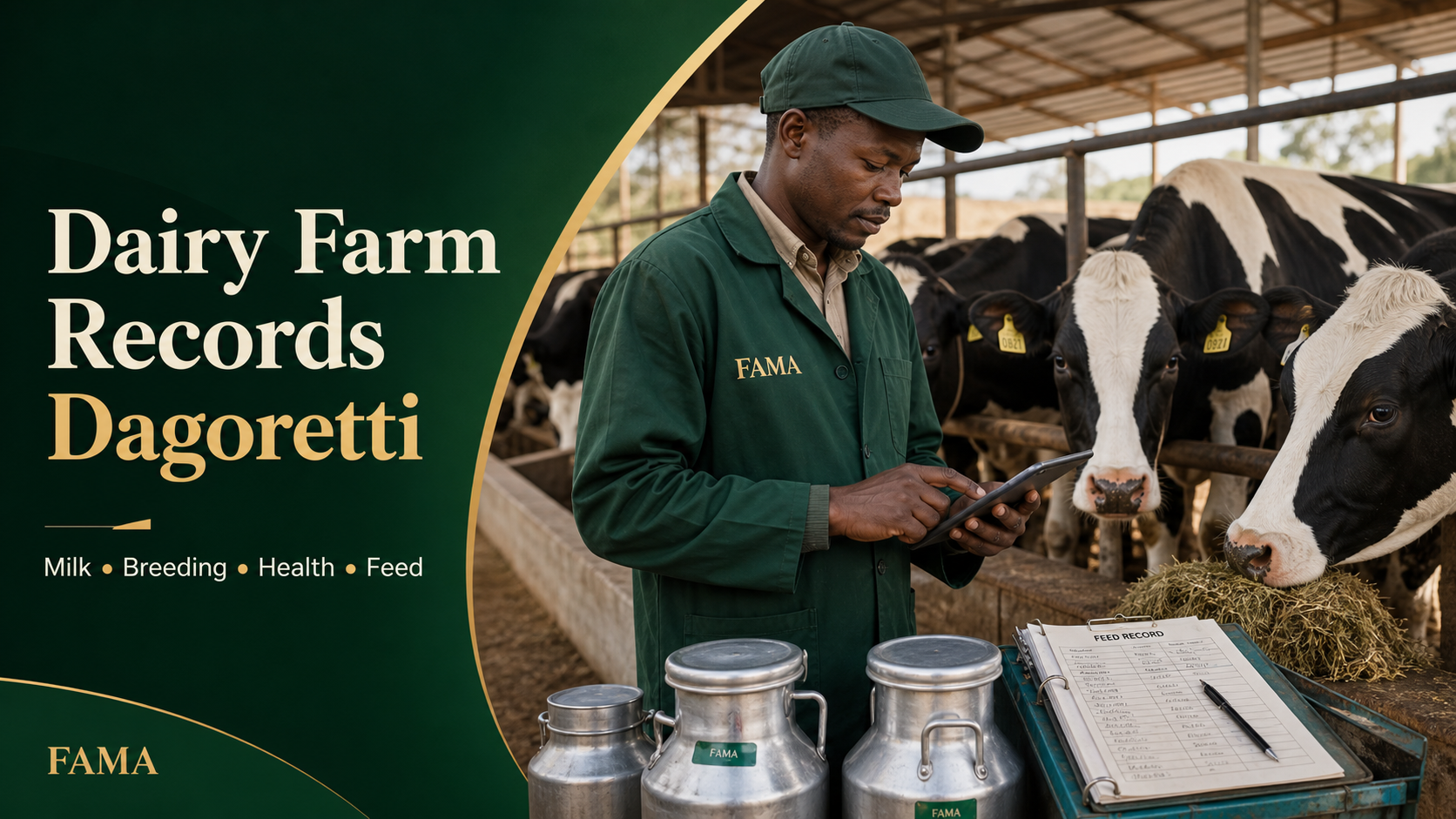
FAMA supports zero-grazing dairy farmers, milk producers, breeders, farm supervisors and dairy cooperatives across Dagoretti North, Dagoretti South, Waithaka, Uthiru, Ruthimitu, Riruta, Kawangware and nearby peri-urban dairy zones. It connects day-to-day farm activity with the records an owner needs for decisions: animal profiles, milk yields, breeding, health treatments, feed, expenses, sales and individual-cow performance.
Powered by Zama Systems. FAMA combines farm operations, Kenyan agribusiness realities and business automation in one management platform.
See FAMA using your own farm workflow
Bring your current record books, crop or livestock list, workers, inputs, recurring expenses and the reports you need. The demonstration can follow the exact work your farm performs.
Why farmers search for Dairy Farm Records Software Dagoretti
Farm records often become difficult when the business grows. Common problems include breeding dates being forgotten, treatment history missing, milk totals not matching sales, feed costs rising and low-performing animals remaining unidentified. A farmer may be busy every day and still lack evidence about which activity makes money, where inputs are lost or which production unit needs attention.
FAMA creates one operating record for the farm. Activities, inputs, workers, livestock, crops, harvests, purchases, sales and expenses can be reviewed together instead of being reconstructed at the end of the month.
What clients expect from farm management software
Simple records that workers can maintain
A farm system only helps when the operating team can use it consistently. Daily records should be clear: what was done, where, by whom, which input was used, how much was used, what result was observed and what follow-up is required.
Crop and livestock visibility
Crop farmers need seasons, plots, varieties, activities, applications, harvests and buyers. Livestock farmers need animal or flock records, health, breeding, feed, production and sales. Mixed farms need both without creating separate disconnected books.
Input and inventory control
Seed, fertilizer, chemicals, feed, medicine, packaging and spare parts represent real money. FAMA helps record purchases, issues, usage and balances. Physical stock counts remain important, but software makes unusual movement easier to investigate.
Worker tasks and accountability
Farm owners need to know which work was assigned, completed, delayed or repeated. Clear tasks improve supervision and make labour costs easier to connect with the crop, greenhouse, herd, flock or project that benefited.
Expenses, sales and profitability
Revenue alone does not show farm performance. The owner needs costs for inputs, labour, transport, veterinary services, machinery, rent, utilities and losses. When these are linked to production and sales, the farm can estimate gross margin and compare enterprises.
FAMA features for Dagoretti farmers
- Farm and enterprise setup: organize crops, livestock, poultry, dairy, greenhouse and mixed-farm activities.
- Activity records: capture planting, feeding, spraying, treatment, breeding, harvesting and other daily work.
- Input inventory: track purchases, issues, balances, suppliers and usage by project.
- Worker management: assign tasks, record attendance or work completed and review labour allocation.
- Expense tracking: record operating costs by farm, enterprise, season, batch or production unit.
- Production records: capture harvests, milk, eggs, weight, births, mortality and other output measures.
- Sales and buyers: record quantities, prices, customers, payment status and delivery information.
- Reports: review costs, production, stock, sales, tasks and performance from one system.
Buyer checklist for Dairy Farm Records Software Dagoretti
- Can the software handle the farm’s actual crops, animals, poultry or mixed enterprises?
- Can workers capture essential records from a phone or practical shared device?
- Can managers limit permissions for expenses, stock adjustments and sensitive reports?
- Can the owner compare planned and actual work, inputs, production and costs?
- Can stock usage be connected to a crop, herd, flock, greenhouse or project?
- Can records be exported or reviewed in management reports?
- Is onboarding available to clean existing farm data and train users?
- Can the system grow to more farms, workers, enterprises and counties?
How to implement FAMA on a farm in Dagoretti
1. Map the current record system
Collect notebooks, spreadsheets, receipts, stock cards, worker sheets and sales records. Identify which records are useful, duplicated, missing or difficult to verify.
2. Define farms, enterprises and production units
Agree on farm names, plots, greenhouses, herds, flocks, batches, crop cycles and cost centres. Clean naming is essential because reports depend on consistent records.
3. Load opening records
Enter active crops or livestock, current input balances, workers, suppliers, buyers and opening financial records required for the first reporting period.
4. Train with realistic daily work
Practice receiving an input, issuing stock, assigning a task, recording treatment or spraying, entering production, making a sale and correcting an approved mistake.
5. Review the first month
Compare software records with physical stock, cash, M-Pesa, bank transactions, production and sales. Correct process gaps early and agree on a weekly management review.
Frequently asked questions
Is FAMA suitable for a small farm?
Yes. A small farm can begin with essential activities, expenses, inputs, production and sales, then add more controls as operations grow.
Can FAMA handle crops and livestock together?
FAMA is positioned for mixed Kenyan farms as well as specialized dairy, poultry, livestock, greenhouse and crop operations.
Can an absentee owner monitor the farm?
Consistent digital records give an owner better visibility than relying only on calls and messages. Good results still depend on clear responsibilities, timely entry and management review.
Does FAMA show farm profit?
FAMA can organize expenses, production and sales so managers can evaluate performance. Accurate profitability depends on complete cost and revenue records.
Can FAMA support cooperatives or multiple farms?
Growing organizations should demonstrate the required member, farm, user, inventory and reporting structure before rollout.
Related FAMA Nairobi guides
- Urban Farming Management Software Nairobi
- Poultry Farm Management Software Kasarani
- Greenhouse Farm Management Software Embakasi
- Farm Expense Tracking Software Langata
Explore FAMA farm management software Kenya. For automation and integration expertise, visit Zama Systems. Farmers may also consult the Kenya Ministry of Agriculture and KALRO for official agricultural information.
Ready to control your farm records in Dagoretti?
Request a focused FAMA demonstration using your actual crops, livestock, workers, inputs, expenses and reports. Start with FAMA.