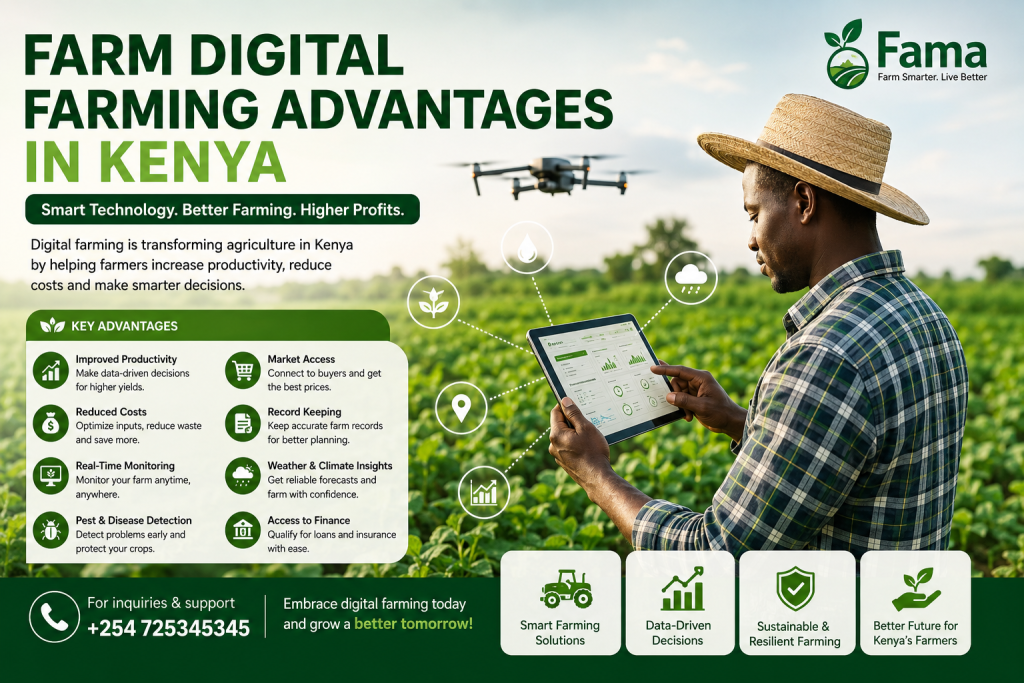
In today’s fast-evolving agricultural sector, digital farming is no longer a luxury—it is becoming a necessity for farmers who want to increase productivity, reduce losses, and maximize profits. In Kenya, where agriculture remains the backbone of the economy, the adoption of technology-driven farming systems is transforming how farmers plan, monitor, and manage their farms.
This comprehensive guide explores farm digital farming advantages in Kenya, how technology is reshaping agriculture, and why every modern farmer should consider switching from traditional methods to smart farming solutions. If you are looking for a powerful farm management solution, you can also explore Fama, a digital platform designed to help farmers and agribusinesses streamline operations.
For inquiries or consultations, contact: +254 725345345
What Is Digital Farming?
Digital farming refers to the use of modern technologies such as mobile apps, cloud systems, sensors, data analytics, and AI tools to manage agricultural activities. Instead of relying on guesswork, farmers make decisions based on real-time data.
In Kenya, digital farming is rapidly growing due to:
- Increased smartphone usage among farmers
- Availability of mobile internet in rural areas
- Government and private sector support for agri-tech
- Rising need for food security and efficiency
The concept of farm digital farming advantages in Kenya revolves around improving productivity while minimizing waste and operational inefficiencies.
Why Digital Farming Is Important in Kenya
Kenya’s agriculture sector faces several challenges:
- Unpredictable weather patterns due to climate change
- High cost of farm inputs
- Pest and disease outbreaks
- Limited access to markets
- Inefficient farm record-keeping
Digital farming solves many of these challenges by introducing precision, automation, and better decision-making tools.
This is why discussions around farm digital farming advantages in Kenya are becoming more common among farmers, agribusiness owners, and policymakers.
Key Farm Digital Farming Advantages in Kenya
Below are the major benefits that farmers in Kenya are experiencing through digital transformation.
1. Improved Farm Productivity
One of the biggest farm digital farming advantages in Kenya is increased productivity. With digital tools, farmers can:
- Track crop growth stages
- Monitor soil health
- Apply fertilizers at the right time
- Optimize irrigation schedules
When farmers use data instead of guesswork, yields improve significantly.
2. Better Decision Making Through Data
Digital farming systems collect and analyze data such as:
- Rainfall patterns
- Soil moisture levels
- Crop performance history
- Market price trends
This helps farmers make informed decisions about planting, harvesting, and selling.
Data-driven farming is one of the most powerful farm digital farming advantages in Kenya because it reduces uncertainty and risk.
3. Reduced Farm Operational Costs
Many farmers in Kenya lose money due to inefficiencies. Digital farming helps reduce costs by:
- Preventing overuse of fertilizers and pesticides
- Reducing water waste through smart irrigation
- Minimizing labor inefficiencies
- Avoiding crop failure through early detection systems
By optimizing resources, farmers save money and increase profits.
4. Real-Time Farm Monitoring
With digital farming platforms, farmers can monitor their farms remotely using mobile devices.
They can track:
- Crop health
- Livestock conditions
- Weather changes
- Irrigation systems
This is especially useful for large-scale farms or farmers managing multiple locations.
Real-time monitoring is one of the most practical farm digital farming advantages in Kenya today.
5. Pest and Disease Detection
Pests and diseases are a major challenge in Kenyan agriculture. Digital farming tools use:
- AI image recognition
- Sensor alerts
- Weather-based predictions
These technologies help farmers detect problems early before they spread.
Early detection reduces crop losses and improves yield quality.
6. Market Access and Price Optimization
Farmers often struggle to find profitable markets. Digital platforms provide:
- Direct access to buyers
- Price comparison tools
- Market trend analysis
- Online selling platforms
This ensures farmers sell at the best possible price.
Improved market access is a crucial farm digital farming advantages in Kenya that boosts farmer income.
7. Efficient Farm Record Keeping
Traditional farming relies heavily on manual records, which are often lost or incomplete. Digital farming systems help farmers store:
- Expense records
- Yield history
- Input usage
- Labor costs
These records are essential for financial planning and loan applications.
8. Climate-Smart Farming
Climate change has made agriculture unpredictable. Digital farming tools help farmers adapt by:
- Providing weather forecasts
- Recommending planting times
- Suggesting drought-resistant crops
- Monitoring rainfall patterns
This makes farming more resilient and sustainable.
9. Access to Financial Services
Digital farming platforms often integrate financial services such as:
- Farm loans
- Insurance products
- Savings plans
- Credit scoring based on farm data
This allows farmers to access funding more easily than traditional methods.
10. Increased Efficiency in Large-Scale Farming
For commercial farms, digital systems help manage:
- Multiple fields
- Workers and tasks
- Machinery usage
- Supply chain logistics
This leads to smoother operations and higher efficiency.
How Digital Farming Works in Kenya
Digital farming systems typically include:
1. Mobile Applications
Farmers use apps to track activities, receive alerts, and access recommendations.
2. Cloud-Based Systems
Data is stored securely online and accessible from anywhere.
3. IoT Sensors
Sensors measure soil moisture, temperature, and crop health.
4. AI Analytics
Artificial intelligence processes farm data and gives recommendations.
5. GPS Mapping
Helps farmers map their fields and monitor crop zones.
All these components work together to deliver the full farm digital farming advantages in Kenya.
Role of Technology Companies in Digital Farming
Companies like Fama are playing a major role in transforming agriculture in Kenya by offering:
- Farm management systems
- Digital record keeping tools
- Crop monitoring solutions
- Reporting and analytics dashboards
- Farmer support systems
These platforms simplify farming and make technology accessible even to small-scale farmers.
Challenges Facing Digital Farming in Kenya
Despite its benefits, digital farming still faces challenges such as:
1. Limited Digital Literacy
Some farmers struggle to use digital tools effectively.
2. Internet Connectivity Issues
Rural areas may have unstable internet access.
3. High Initial Setup Costs
Some technologies require investment.
4. Resistance to Change
Traditional farmers may be slow to adopt new systems.
However, these challenges are gradually being solved through education and affordable technologies.
Future of Digital Farming in Kenya
The future of agriculture in Kenya is strongly digital. Trends include:
- Increased use of AI in farming
- Expansion of drone technology
- Smart irrigation systems
- Blockchain-based food tracking
- Fully automated farms
As technology evolves, farm digital farming advantages in Kenya will continue to grow and become even more impactful.
Why Farmers Should Adopt Digital Farming Today
Farmers who adopt digital systems benefit from:
- Higher yields
- Lower costs
- Better market prices
- Reduced risks
- Improved efficiency
Delaying adoption may result in reduced competitiveness in the agricultural market.
Real-Life Impact of Digital Farming in Kenya
Many farmers who have adopted digital farming report:
- 30%–60% increase in productivity
- Reduced fertilizer and pesticide usage
- Better harvest planning
- Improved financial management
This shows that digital farming is not just theory—it is already transforming lives.
How to Get Started with Digital Farming in Kenya
If you are a farmer and want to adopt digital farming, here are steps to follow:
- Identify your farm needs
- Choose a reliable digital platform
- Digitize your farm records
- Train yourself or your workers
- Start small and scale gradually
You can also contact experts for guidance and setup support.
For assistance, call: +254 725345345
Conclusion
The farm digital farming advantages in Kenya are clear and powerful. From improved productivity and reduced costs to better market access and climate resilience, digital farming is revolutionizing agriculture across the country.
As Kenya continues to embrace technology, farmers who adopt digital solutions will have a competitive advantage in the agricultural market.
Platforms like Fama are making it easier for farmers to transition into smart agriculture by offering accessible, user-friendly digital tools.
If you are serious about improving your farm performance, now is the best time to embrace digital farming.
Contact: +254 725345345